Pause
Slow down urgent messages.
Visual learning lab
Explore quick visuals, realistic examples, short videos, and click-to-open safety playbooks. Each topic shows what to notice and what to do next.
Most everyday cyber attacks follow the same path. Learn this loop and the details get easier.
Slow down urgent messages.
Use official apps or known numbers.
Use unique passwords, MFA, and updates.
Save evidence and tell the right place.
Picture the threat
Use these snapshots to recognize what scams and safer account habits look like in everyday life.
Core habit
Definition: Password security means using login passwords that are hard to guess and not reused across accounts.
Goal: one unique password per important account, stored safely.
Look for reused passwords first because one leaked password can unlock several accounts.
Fix reused passwords on email, banking, school, and social accounts first.
Use this quick official video to reinforce long, unique passwords.
Second proof
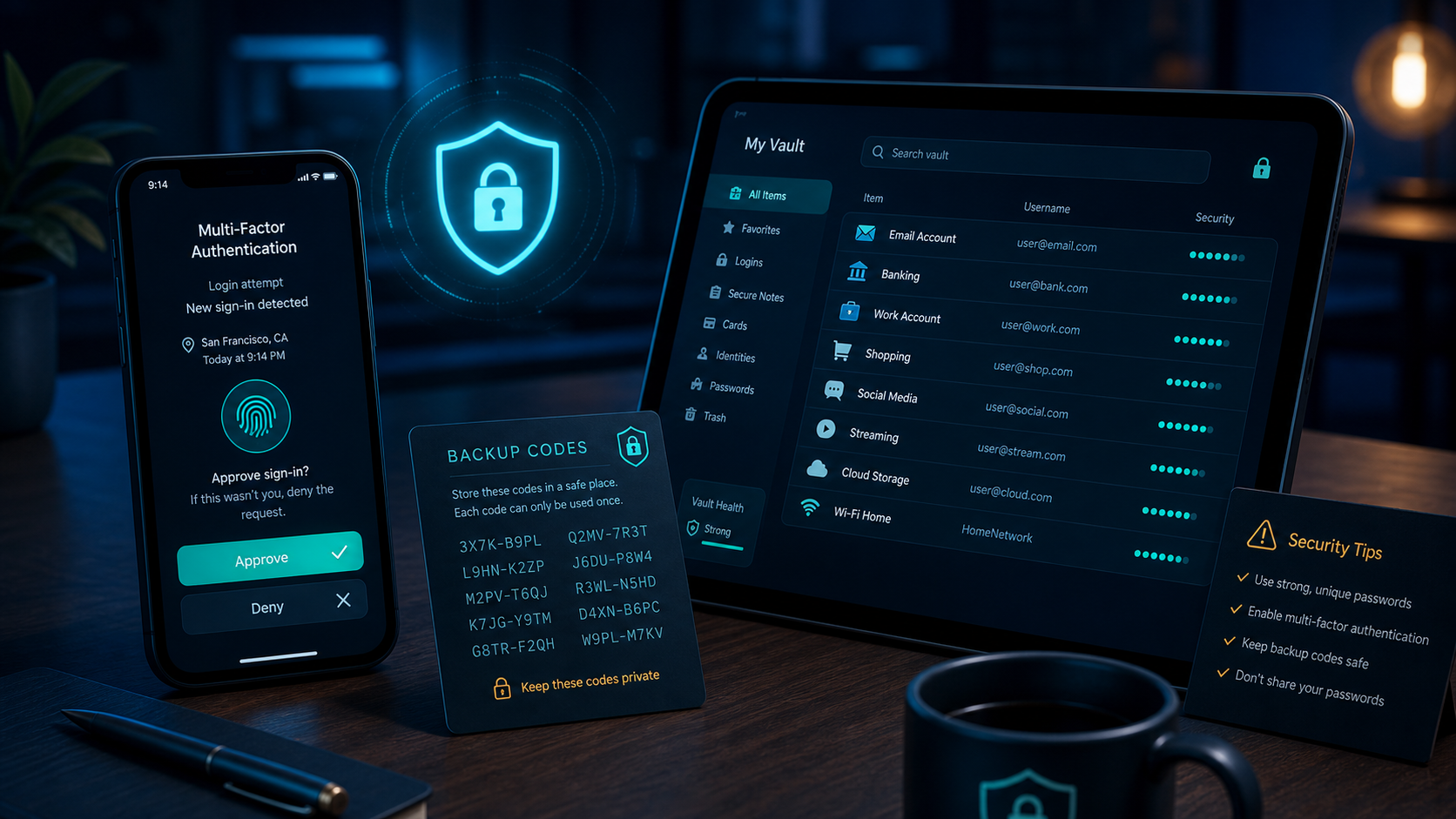
Definition: Multi-factor authentication, or MFA, is an extra login step that proves it is really you.
MFA means a stolen password is not enough by itself.
Look for accounts where a second login check can stop someone who already has your password.
Authenticator app or security key
Text-message code
Approving prompts you did not request
Shows why a second proof protects accounts when passwords leak.
Most common attack
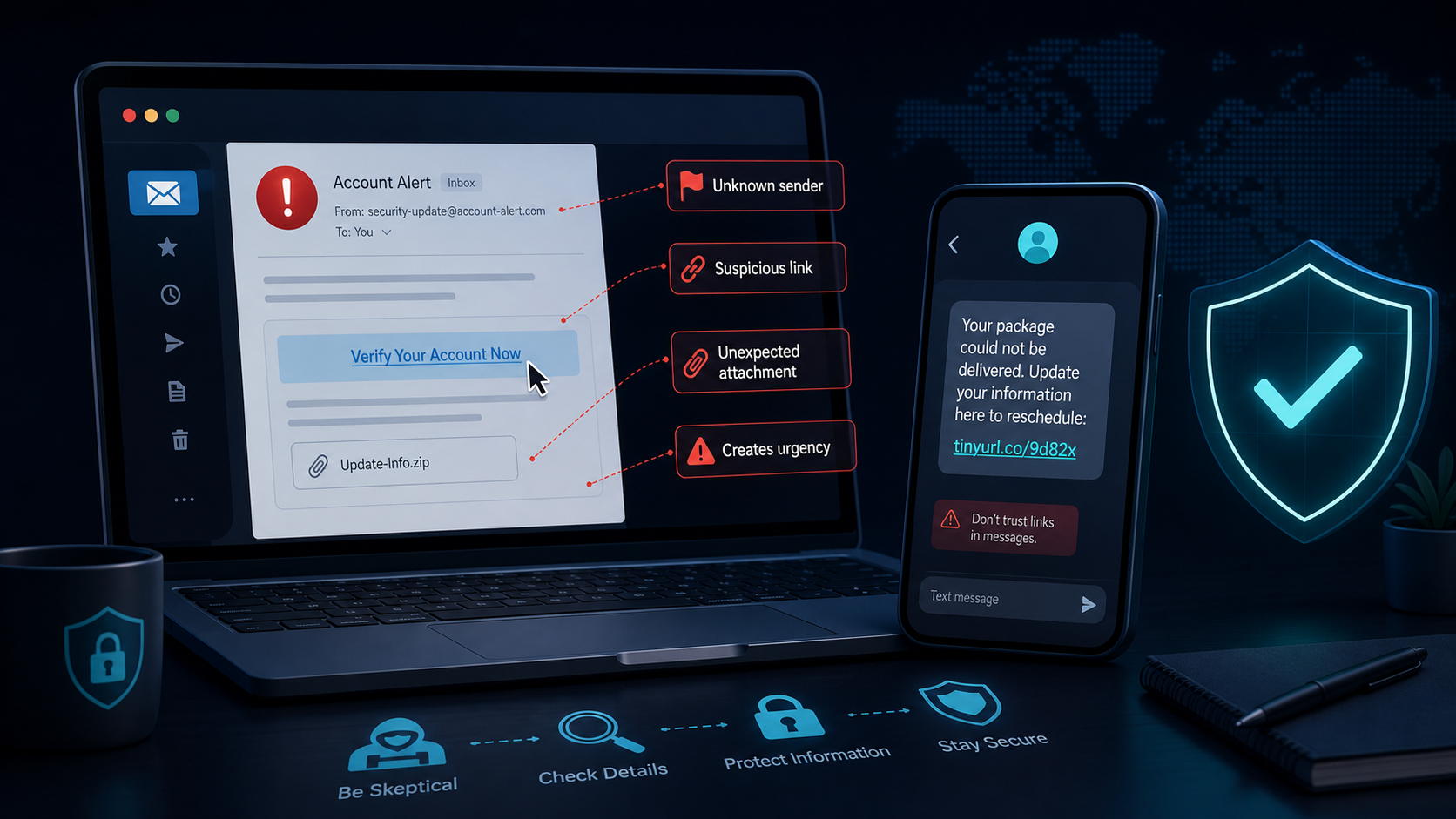
Definition: Phishing uses fake emails, websites, or messages to trick you. Smishing is phishing through text messages.
Smishing: Smishing is a scam text that may claim a package, bank alert, prize, or account problem needs immediate action.
These scams pretend to be trusted so you click, pay, or reveal information.
Look for pressure, strange links, password/code requests, and messages that feel unusually urgent.
Your account will close in 2 hours. Confirm your password to restore access.
Practice spotting fake senders, urgent language, and suspicious links.
Daily habit
Definition: Safe browsing means checking websites, links, downloads, and apps before trusting them.
Most malware tricks people into installing it or entering data on a fake page.
Look for fake domains, surprise downloads, popups, and apps from places you do not recognize.
Official app store, typed URLs, browser updates.
Popups, cracked apps, unknown extensions, surprise downloads.
Connects updates, passwords, MFA, and scam reporting into one habit loop.
Network safety
Definition: Public Wi-Fi is internet access shared by many people in places like schools, cafes, airports, and libraries.
Fake hotspots can copy familiar names and capture traffic or passwords.
Look for network names that are almost right, too generic, or not confirmed by the location.
Learn what to check before using shared networks in public places.
Recovery skill
Definition: Identity theft happens when someone uses your personal information or account access without permission.
Fast action limits damage when personal information or an account is exposed.
Look for the fastest safe next step: secure the account, contact support, save evidence, then report.
Evidence helps banks, platforms, schools, and fraud reports.
Use official recovery steps when personal information may be exposed.
Trusted links
Use these when you want official guidance, scam help, or recovery steps.
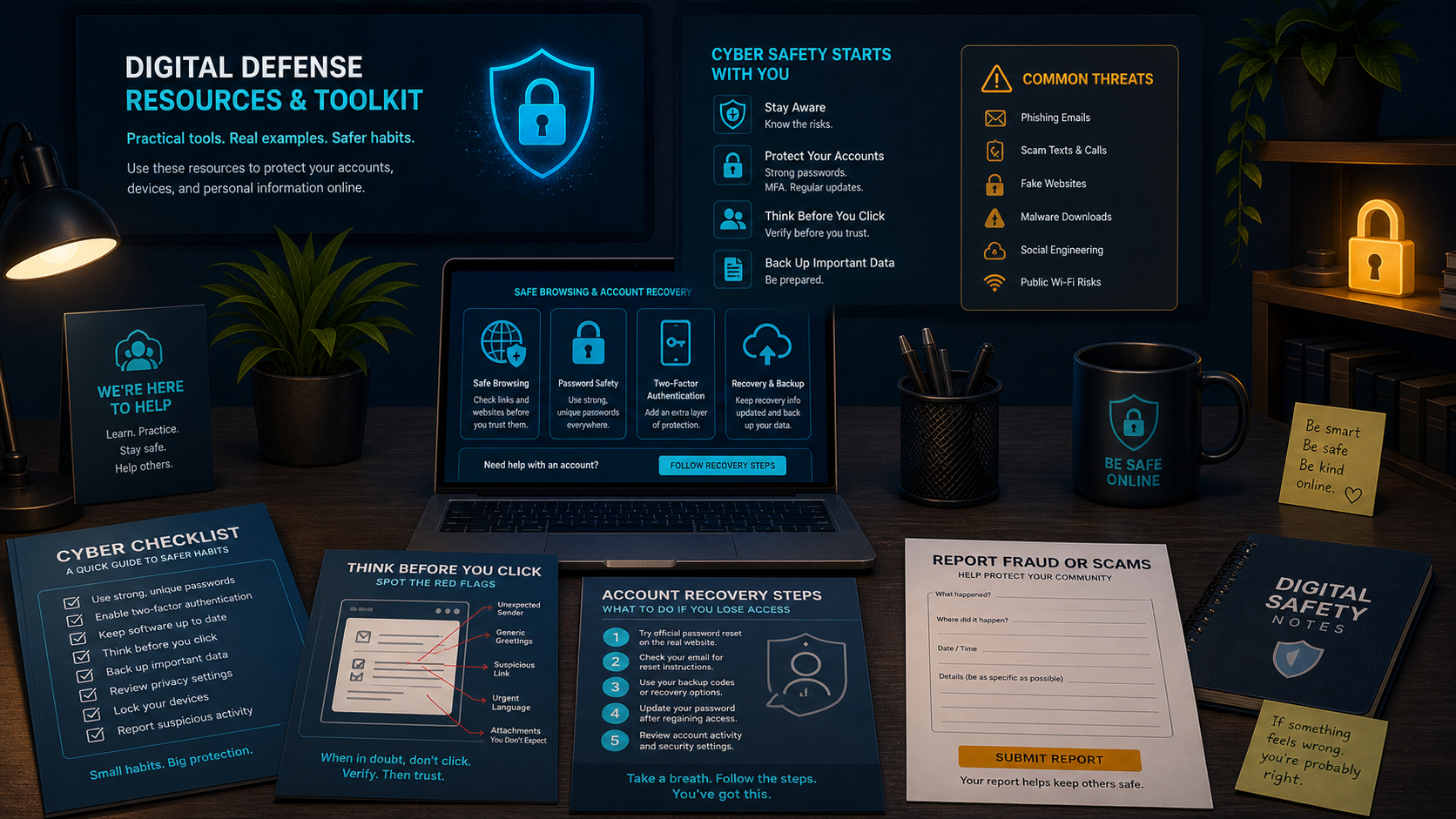
Turn the visuals into action with the interactive toolkit.
People hacking
Social Engineering and Deepfakes
Definition: Social engineering is when someone manipulates your trust or emotions to get you to do something unsafe.
Scammers use trust, identity, and emotion to bypass careful thinking.
Look for requests that ask you to keep secrets, rush, send money, or share a login code.
Fake Friend Message
Real Example
A copied profile or cloned voice asks for money, secrecy, or a login code.
Safe Move
Contact the person through a known number or account.
FTC: Impersonation Scams
See how scammers use authority, fear, and fake support scripts.